
Termites in Central Virginia: What Homeowners Need to Know
What Kind of Termites Are Found in Virginia?
The termite homeowners in Central Virginia are most likely to encounter is the Eastern subterranean termite. As the name suggests, subterranean termites typically establish colonies underground. From there, workers travel through soil and protective mud tubes to reach sources of cellulose—including the wood used in homes. Because much of this activity occurs underground, behind walls, beneath flooring or in other concealed areas, a termite infestation may not be immediately obvious.
That is one of the reasons professional termite inspections are so important. The absence of visible termites does not necessarily mean termites are absent from the property.
How Does a Termite Colony Work?
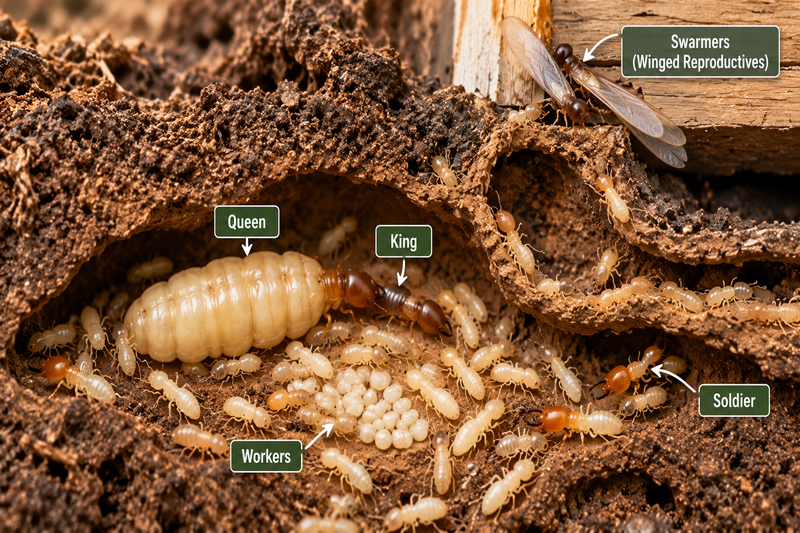
Termites live in highly organized colonies made up of different castes, each performing a specific job. The queen and king are responsible for reproduction. A mature queen can produce large numbers of eggs and help sustain a colony for years. Queen can live 15 -35+ years producing 1000 eggs daily! Worker termites make up the majority of a typical colony. They forage for food, maintain the nest, care for developing termites and feed other members of the colony. These pale, soft-bodied termites are also responsible for most of the wood damage associated with an infestation.
Soldier termites protect the colony. They are generally identifiable by their larger heads and prominent jaws.
There are also winged reproductive termites, called swarmers or alates. These termites leave established colonies to mate and begin new colonies. After finding a suitable location, they shed their wings.
Finding termite swarmers—or piles of discarded wings—inside or immediately around your home can be an important warning sign that deserves further investigation.
How Much Damage Can Termites Cause?
Termites don’t need to announce their presence to do serious damage. They feed on cellulose, a material found in wood and many other plant-based products. When a colony gains access to a home, termites may damage structural framing, flooring, trim, wall components and other wood-based materials.
Potential problem areas include:
- Wood that comes into direct contact with soil
- Crawl spaces and foundations
- Damp or moisture-damaged wood
- Wood piles stored close to the house
- Loose or deteriorating wooden siding and trim
- Areas around plumbing leaks or drainage problems
- Decks, porches and other wooden structures
- Cracks or gaps that provide access to the structure
Termite damage can be particularly troublesome because much of it occurs out of sight. Wood may appear relatively normal from the outside while termites are feeding internally. That makes prevention and early detection especially valuable.
Are Termites Active During Winter in Central Virginia?
Many homeowners associate termites exclusively with spring and summer, but termites don’t necessarily disappear when temperatures fall. Termites definitely continue activities in winter and are more prone to gravitate towards thermal footprints on crawl spaces and slabs since soil is warmer. Termites are also cold-blooded insects, so temperature affects their activity. However, Eastern subterranean termites live primarily below ground, where soil can provide protection from extreme temperature changes. They may also find protected conditions beneath foundations, inside crawl spaces or within heated structures.
As a result, termite colonies can survive periods of cold weather and resume or continue activity when conditions are favorable. Central Virginia’s variable winters make it especially important not to assume that cold weather has eliminated an existing termite problem.
Signs You May Have a Termite Problem
Because termites are so good at remaining hidden, homeowners should watch for some of the more common indicators of activity.
These can include mud tubes along foundations or crawl-space walls, discarded wings, termite swarmers, damaged or hollow-sounding wood, blistering or unusual-looking wood surfaces, and visible deterioration around areas where wood and soil meet.
Not every unusual spot on a piece of wood means termites are present. Likewise, not seeing these signs does not guarantee that a property is termite-free. When there is a question, a professional inspection can help determine what is actually happening.
Moisture and Termites: An Important Connection
Moisture problems around a home can create conditions that are more attractive to termites and other wood-destroying organisms. Leaking pipes, poor drainage, clogged gutters, excessive crawl-space moisture and wood-to-soil contact should all be addressed as part of a long-term termite prevention strategy. Correcting the conditions that contribute to pest activity is an important part of the holistic approach to pest management.
Suspect Termites? Don’t Wait for the Damage to Become Obvious.
When it comes to termites, early detection matters. If you have noticed suspicious activity—or simply haven’t had your property evaluated in some time—Holistic Pest Solutions can assess your home for signs of termite activity and conditions that could make your property more vulnerable to infestation.
Our goal isn’t simply to address the pest you see today. We look at the property as a whole, identify contributing conditions and recommend practical strategies for effective, long-term termite control.
Termite Control in Charlottesville, Waynesboro & Central Virginia
Holistic Pest Solutions provides professional termite and pest-control services for homeowners throughout Charlottesville, Waynesboro and surrounding Central Virginia communities. If you suspect termites are already making themselves at home, don’t give them more time to settle in.
Call Holistic Pest Solutions at 434-842-1700 for a free assessment.
We’ll help determine whether termites are present, evaluate areas of concern and recommend an appropriate plan for protecting your home—with solutions that are mindful of both our clients and our Earth.
Our Environmental Commitment
Holistic Pest Solutions is committed to protecting homes and properties while minimizing unnecessary environmental impact. Our holistic pest-management practices focus on responsible solutions, prevention and long-term control while remaining mindful of the soils, plants and landscapes that surround the homes we protect.
Protect your home. Understand the cause. Treat the problem responsibly. That’s the Holistic Pest Solutions approach.
Ready for a professional home inspection? Contact Holistic Pest Solutions today and let us help keep your home protected—naturally, effectively, and year-round. We’re mindful of our clients and our Earth. 🐝🌼