
Why They're Entering Your Home (And Why You Shouldn't Squish Them)
As temperatures begin to change, homeowners across Virginia often notice an unwelcome guest making its way indoors—the stink bug.
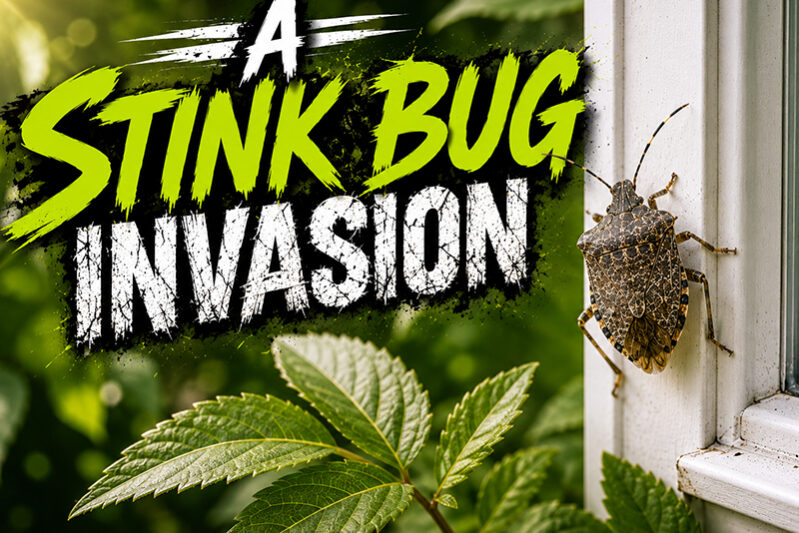
Officially known as shield bugs because of the shield-shaped plate covering their backs, stink bugs have earned their more popular name for one very obvious reason. When threatened or crushed, they release a powerful, unpleasant odor from specialized glands on their thorax as a defense mechanism.
While stink bugs are generally harmless to people and pets, they can become a major nuisance inside your home and are capable of causing significant damage to gardens, crops, and ornamental plants.
What Are Stink Bugs?
Adult stink bugs grow to about the size of your thumbnail and are commonly found in shades of mottled brown or bright green throughout Virginia.
Unlike biting insects, stink bugs don’t bite people. Instead, they use a long, straw-like mouthpart called a proboscis to pierce leaves, stems, fruits, and vegetables so they can feed on plant sap. This feeding can weaken plants and damage crops, making stink bugs a serious agricultural pest. Female stink bugs lay clusters of eggs on the undersides of mature leaves, giving newly hatched nymphs immediate access to a food source.
It’s a Bad Idea to Squish Them
Your first instinct may be to squash a stink bug—but that’s exactly what you shouldn’t do. When crushed or threatened, stink bugs release a foul-smelling chemical that lingers on surfaces and hands. Even worse, the odor can attract additional stink bugs to the area.
If you find one indoors, a simple spray bottle filled with warm water and a few drops of dish soap is an effective way to eliminate individual insects without creating the unpleasant smell.
Why Are Stink Bugs Invading My House?
As the weather cools, stink bugs begin searching for warm, protected places to spend the winter. Homes provide the perfect shelter.
They commonly enter through:
- Gaps around windows and doors
- Damaged window screens
- Cracks in foundations or siding
- Utility pipe openings
- Roof vents
- Small openings around trim and exterior fixtures
Sealing these entry points can help reduce infestations, but locating every possible opening is often difficult.
When stink bugs begin appearing in large numbers, professional exterior treatments are typically the most effective solution for keeping them out.
Quick Facts About Stink Bugs
- More than 900 species of stink bugs exist worldwide, along with over 1,200 subspecies.
- The most common species found in Virginia are brown marmorated and green stink bugs.
- The best way to keep them from invading your home is treating between July and September.
- Dish soap mixed with water can eliminate individual stink bugs you find.
- If you see one stink bug indoors, there are often many more hiding in walls, attics, or crawl spaces.
- Egg clusters are commonly found on the undersides of squash, cucumber, watermelon, and other garden plants.
- Remove infested leaves carefully and dispose of them in a sealed bag.
- Running a dehumidifier and reducing outdoor lighting at night may make your home less attractive to stink bugs.
- Never crush a stink bug indoors—the odor can linger and may attract additional insects.
Keep Stink Bugs Outside—Where They Belong
If stink bugs have started invading your home, don’t wait until they become a full-blown infestation. Professional exterior treatments can help prevent these pests from entering in the first place.
At Holistic Pest Solutions, we provide environmentally responsible pest control solutions that keep stink bugs and other seasonal invaders where they belong—outside. CONTACT Holistic Pest Solutions if you want to learn more about our treatment plans or give us a call at 434 842 1700. Whether you’re in Charlottesville, Waynesboro, or close by to either, Holistic Pest Solutions has the perfect plan for you! Our treatments are mindful of our clients, and our Earth.
*Our Environmental Commitment: Holistic Pest Solutions is committed to the preservation of our environment. Our goal is to nurture the soils and plant life of lawns and landscapes. Utilizing holistic pest control practices that cause the least amount of impact on the environment.